
Mobile home claims deserve someone who knows mobile homes
Mobile and manufactured homes are built differently, damaged differently and often insured differently than site-built houses. Many adjusters treat them like a regular house. We don't.
Why mobile home claims are different
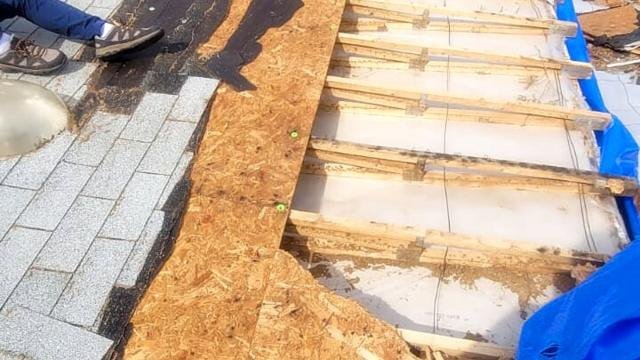
A mobile home sits on piers and is held down by anchors and straps. Its plumbing, ductwork and insulation run underneath, protected by a thin barrier. Its roof may be metal, or a newer “roof-over” installed on top of the original. All of that changes how damage happens — and how it should be inspected.
The policies are different too. Depending on your insurance company and policy, you may find:
- Actual cash value instead of replacement cost on some or all of the home — meaning depreciation is subtracted.
- Wind coverage that is limited, excluded or written separately.
- Lower limits or exclusions for carports, screen rooms, porches, sheds and other attached or “other” structures.
- Specific requirements about tie-downs and anchoring.
We read your policy first, so you know what applies before anything else happens.
Damage we look for on mobile homes
Roof
Lifted or torn metal panels, failed seams and coatings, damaged roof-overs, leaks at vents and edges.
Underneath
Torn underbelly (bottom board), wet or fallen insulation, damaged ducts, plumbing leaks and wet or soft subfloor.
Structure & anchoring
Shifted piers, damaged tie-downs or straps, a home that moved on its foundation.
Outside
Skirting, siding, windows, doors, carports, screen rooms, steps and decks.
Inside
Ceiling and wall panel stains, warped floors, cabinets and the water damage that follows a roof or plumbing leak.
Damage under a mobile home is easy to miss, because nobody wants to crawl under there. We do — or document it with the right equipment — because a leak that soaked the subfloor is part of the claim.
After a storm or leak
- Make sure the home is safe to enter. If it shifted on its piers or anchors, stay out until it's checked.
- Photograph the outside, the skirting, the roof (from the ground) and every room inside.
- Shut off water if there's an active leak, and keep receipts for any emergency repairs.
- Report the claim and save the claim number.
- Call us before agreeing to a settlement you don't understand.
Do you own the home but rent the lot? That's common in Central Florida parks. Your policy covers your home; the park's policy covers the park's property. We can help you sort out which damage belongs to which.
Coverage, limits, deductibles and outcomes depend on each policy and the facts of the loss. We do not guarantee amounts or results.
Mobile home claim questions
Is a manufactured home the same as a mobile home?
People use the words interchangeably. Technically, homes built to the federal HUD code after June 1976 are called manufactured homes; older ones are mobile homes. Insurance companies may use either term. We work with both.
My policy says “actual cash value.” What does that mean for my claim?
Actual cash value is the cost to repair or replace, minus depreciation for age and condition. It usually pays less than replacement cost. We'll show you how it's being calculated so you can see whether the depreciation is reasonable.
Is my carport or screen room covered?
It depends on your policy. Some mobile home policies exclude or limit attached structures like carports, screen rooms and porches. We check before you count on it.
My home is older. Can I still file a claim?
Yes, if it's insured and the damage is covered. Age can affect how the insurance company values the damage, but it doesn't by itself mean you have no claim.